


Boston’s median home price sits around $859,000. Just 15 miles away in Norfolk County, the median sale price in Needham, MA reaches roughly $1.7 million. Same state, very different numbers – and that gap is only the beginning of what separates these two markets. Anyone comparing the two areas will find distinct pros and cons of living in Needham, MA.
Buyers choosing between Needham, MA and Boston are weighing higher upfront purchase costs against differences in property types, daily commute times, and municipal tax rates. It’s not a question of which market is better. It’s a question of which one fits your life.
Housing Markets and Property Types
Needham’s numbers are worth sitting with for a moment. The current median sale price is $1,698,876, driven largely by single-family homes. The year-to-date median for single-family homes alone has climbed to $2,359,500 in 2026. With roughly 60 active listings, homes spending about 21 days on the market, and sellers averaging 100.47% of list price, this is not a market where you show up unprepared.
Boston operates at a different price point and with a very different product mix. The median there runs $775,000 to $890,000, shaped by condo and townhome sales. You’re not usually buying a house in the city – you’re buying a unit.
Comparing Property Tax Rates
Needham’s FY2026 residential property tax rate is $10.83 per $1,000 of assessed value – down from $13.37 five years earlier. The commercial rate is $21.09 per $1,000.
Boston’s FY2026 residential rate is $12.40 per $1,000, up from $11.58 the prior year. The city does offer a 35% residential exemption for owner-occupants, which is the maximum allowed under state law. If you’re buying in Boston as a primary residence, that exemption takes a real bite out of your tax bill and deserves a line in your spreadsheet.
Commuting Logistics and Transportation
The gap between Needham, MA and downtown Boston is roughly 15 miles. That sounds manageable until you think about what those 15 miles require – regional highways, a commuter rail schedule, and a car you’ll use every day.
Living within Boston city limits is a different equation entirely. The MBTA’s subway lines, bus routes, and walkable streets mean plenty of residents never bother with car ownership at all.
Taking the MBTA Commuter Rail
The MBTA Needham Line is the direct public transit connection between the two locations. Needham Center to South Station runs about 38 minutes. Trains depart hourly, so the schedule matters – check the current MBTA timetable before you fall in love with a house and assume it’ll work for your morning.
Driving Routes and Traffic
Needham connects to the region via I-95, Route 128, and Route 9. Those routes get you where you’re going, though rush hour adds time you’ll want to account for. Parking is another factor worth thinking through. Boston neighborhoods typically mean residential permits or paying a premium for a deeded space. Needham homes generally come with private driveways and attached garages.
Space, Density, and Daily Living
Boston’s housing stock is dense by design – attached townhouses, multi-family buildings, condominiums. That density is also what makes walkability work. Groceries, transit, and daily errands are usually close.
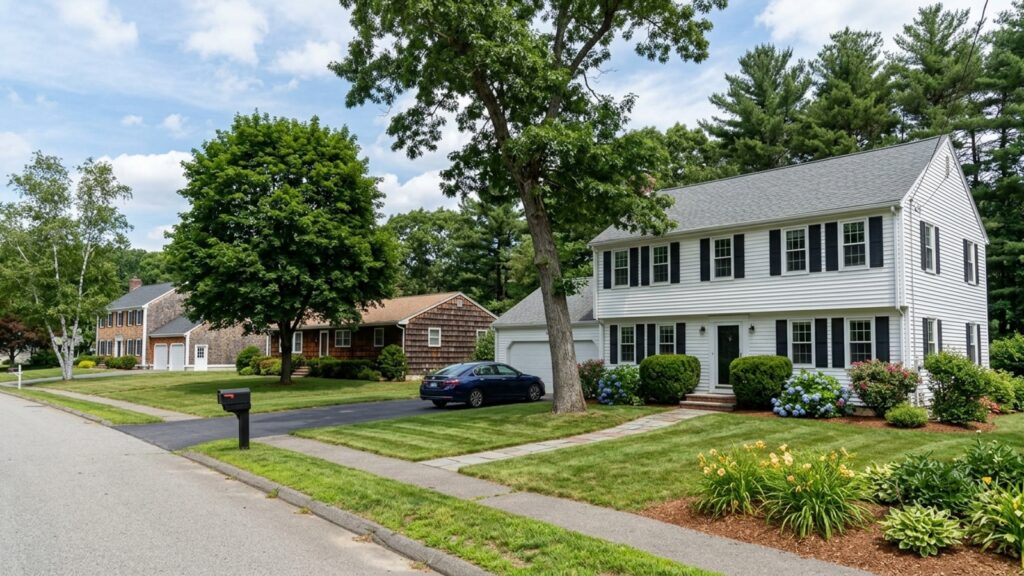
Needham looks and feels different. Detached single-family homes on private lots, spread out the way suburbs are supposed to be. The tradeoff is that a car isn’t optional – it’s infrastructure.
How much square footage you need is a real question here. Needham’s higher median price typically comes with larger floor plans and private outdoor space. Boston’s lower median reflects what city condos are: smaller footprints, shared walls, less storage than you’d like.
Urban Density in Boston
Boston neighborhoods are built around proximity. Transit, amenities, neighbors – all of it is close. For buyers who want to reduce driving and keep commute times short, that density is a feature, not a drawback.
Suburban Layouts in Needham
Needham leans toward detached homes with private yards. If dedicated outdoor space and off-street parking matter to you, this is the kind of environment that delivers that – along with the expectation that you’ll drive to most things.
Frequently Asked Questions
What is the cost of living difference between Needham MA and Boston?
It depends on what you’re buying. Needham’s median is around $1.7 million with a property tax rate of $10.83 per $1,000. Boston’s median runs closer to $859,000 with a $12.40 rate – though the 35% owner-occupant exemption can meaningfully offset that. Lower purchase price in the city doesn’t automatically mean lower overall cost.
How long is the commute from Needham MA to Boston?
The MBTA commuter rail takes about 38 minutes from Needham Center to South Station, with trains running hourly. Driving via I-95, Route 128, or Route 9 gets you there faster under light traffic – and slower when it isn’t.
What types of homes are available in Needham MA compared to Boston?
Needham is primarily detached single-family homes with private driveways. Boston’s inventory runs to condominiums, attached townhomes, and multi-family buildings.
How do property taxes in Needham, MA compare to Boston residential rates?
Needham’s FY2026 residential rate is $10.83 per $1,000 of assessed value. Boston’s is $12.40 per $1,000 – higher on paper, but Boston’s 35% residential exemption for owner-occupants can close that gap considerably.
What are the biggest lifestyle trade-offs when moving from Boston to Needham?
You’re trading walkability for space. Needham gives you detached homes and private yards; Boston gives you dense, transit-accessible neighborhoods where a car is optional. Neither is wrong – they just suit different daily routines.
Are bidding wars for single-family homes more competitive in Needham or Boston?
Both markets move fast. In Needham, homes have been spending about 21 days on the market and sellers have been averaging 100.47% of list price. That’s not a market where you have time to think things over.